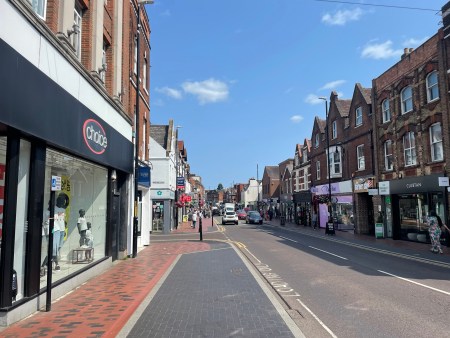
For years, poor mobile phone signal has been a chronic frustration for residents and businesses across Tonbridge, a topic the Tonbridge Bean has consistently covered. This issue has been championed fiercely by Tom Tugendhat MP, who has repeatedly engaged with network providers and conducted community surveys to pinpoint and push for improvements in local “not-spots.”
Now, with the major UK mobile network operators (MNOs) actively phasing out their older 3G networks, the question is whether this nationwide change will translate into a much-needed boost for mobile reception in Tonbridge. The short answer from the industry is: Yes, it should.
The Technical Upside: Spectrum Refarming
The primary benefit of switching off 3G is ‘spectrum refarming.’ Mobile networks rely on specific radio frequencies, or ‘spectrum,’ to transmit data. The 3G network, which is now largely superseded by faster technology, uses this spectrum inefficiently.
By retiring 3G (a process that various operators are completing between 2024 and 2025), MNOs are freeing up this valuable bandwidth and reallocating it to 4G and 5G services.
This reinvestment of capacity is intended to deliver several key improvements:
- Faster Data Speeds: Greater capacity on 4G and 5G means less congestion and quicker downloads.
Improved Call Quality: Modern 4G calling technology, known as VoLTE (Voice over LTE), offers clearer and more reliable voice calls than older 3G and 2G services.
Expanded Coverage: By strengthening the 4G network with the freed-up 3G spectrum, operators can effectively expand and boost their 4G signal in areas that previously struggled—a crucial factor for locations like Tonbridge where patchy signal has been the norm.
The Tonbridge Perspective
While the technical benefits are clear, the real-world impact on areas struggling with ‘partial not-spots’—areas with some signal but a poor user experience—is what matters to Tonbridge residents.
Tom Tugendhat MP has consistently advocated for better service, launching campaigns and surveys to gather data that service providers can use to target local infrastructure improvements. The 3G switch-off provides a huge, industry-wide opportunity to address these long-standing issues by focusing investment entirely on upgrading 4G and deploying 5G, particularly in areas identified by local campaigns.
Potential Pitfalls for Older Devices
It is important to note that the switch-off will affect those still using older mobile devices or services. If a phone is not 4G or 5G compatible, or if it does not support 4G Calling (VoLTE), the user may lose their ability to make calls or access mobile data once 3G is retired on their network. Three UK, for instance, does not operate a 2G network, making the upgrade to a 4G-compatible device essential for its customers.
However, for the vast majority of residents already using modern smartphones, the switch-off should mark the end of an era of frustratingly slow speeds and dropped calls, leading to a stronger, more reliable service overall.
If you want to know more about the impact of the 3G switch off, check out this video Tom calls for better mobile phone signal in Tonbridge. This video is relevant because it features Tom Tugendhat MP discussing the ongoing issues with mobile signal quality in Tonbridge, which directly relates to the question of whether the 3G switch-off will finally bring the desired improvements.
Have you subscribed?
Get our weekly newsletter, including a curated list of events for the weekend, straight to your inbox.

Bringing you all the latest news and events in Tonbridge.








Leave a Reply